

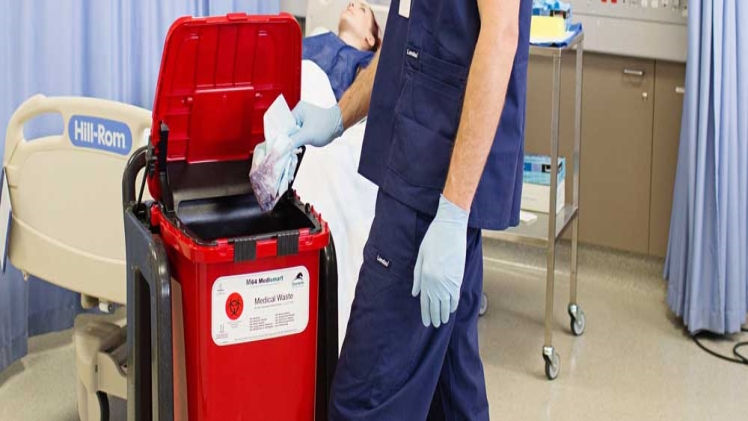
Medical and healthcare facilities should be well aware that improper disposal of medical or healthcare waste can endanger patients and employees, harm the environment, and violate local disposal laws, which can negatively affect the facility’s image and bottom line.
As such, it is essential to have a comprehensive waste management system for your facility to dispose of medical waste and invest in the right equipment to be able to do so, such as having dedicated medical waste bins or biohazard containers to contain your medical waste.
Staff and professionals working in or alongside the healthcare and biomedical fields should also be well-educated on the different types of medical waste, their risks, and how best to dispose of them to ensure general safety.
Types Of Healthcare Waste To Be Aware Of
1. Infectious and Biohazardous Waste
The most common types of waste attributed to healthcare facilities, infectious and biohazardous waste describes any waste that has come into contact with a patient’s bodily fluids (such as blood, spit, and pus) or infected material from laboratory work. Some examples of infectious waste include used bandages, laboratory samples, and diagnostic swabs.
This also includes pathological waste, which refers specifically to human tissues, organs, fluids, or even the carcasses of infected animals.
If improperly disposed of, infected samples or fluids from an infected patient can pass on the infection to other healthy patients, employees, and passers-by.
The safest way to dispose of infectious and biohazard waste is to have it in a separate medical waste bin or biohazard containers. Cooperate with a medical waste management company specialising in clinical waste bins in Australia to schedule regular pick-ups and disposal of your medical waste bins.
2. Sharps Waste
Sharps, or sharps waste, refers to any objects that can pierce or cut through human skin, such as syringes, needles, disposable scalpels, and instruments used in surgery.
Sharps waste carries multiple risks and should be promptly disposed of once used. Improper disposal of sharps waste may lead to injury and infect other patients or employees with blood-borne pathogens.
Healthcare and medical facilities must dispose of their sharps in dedicated sharps disposal containers in Australia. Approved sharps containers can prevent accidental injury when transporting sharps and help separate sharps from other waste.
3. Chemical Waste
Healthcare and medical facilities often deal with various chemicals. Chemical waste from these facilities ranges from disinfectants, solvents used for lab testing, or even mercury from broken thermometers. In addition, pharmaceutical waste such as unused medication or vaccines is sometimes classified under chemical waste.
The risks associated with chemical wastes can vary – mercury, for example, is highly toxic when in contact with skin or when a person is in close proximity to it. Other chemicals may corrode the skin and lead to injury if not handled appropriately.
Chemical waste pollution can also negatively impact the environment if improperly disposed of, such as the contamination of soil and water sources. Apart from that, pharmaceutical waste such as antibiotics can create strains of antibiotic-resistant bacteria, leading to deadlier diseases.
4. Rarer Types Of Medical Waste
Some healthcare facilities may also produce rarer types of waste. For example, cytotoxic waste, containing substances that can destroy cells and genes, can be found in cancer treatment and related research facilities. Radioactive waste is also less common and is primarily found in facilities that handle radioactive testing and treatment.
Both radioactive and cytotoxic waste are hazardous and can be fatal if leaked, so proper care must be taken when handling these types of waste.
5. General Waste
General waste describes any kind of waste produced by a medical or healthcare facility that does not pose a potential health hazard to an individual, such as paper, plastics and liquids.
Although general waste is harmless and does not need to be disposed of in medical waste bins, it is crucial to never mix general waste and hazardous healthcare waste together. Failure to separate general waste and hazardous healthcare waste may cause confusion as to which is which, which can lead to improper healthcare waste disposal.
Ensure Proper Disposal Of Medical Waste
The proper disposal of medical waste requires the right waste management procedures and thorough education on the types and risks of medical waste for individuals involved in the healthcare or medical industry.
It is also essential to invest in high-quality medical waste bins and biohazard containers, to greatly reduce the risks that come with the disposal and transportation of medical wastes.
